

Group Classes

Let's discuss your organization's needs and objectives
Corporate Group Classes
Immersive and Collaborative Program Designed for a Guided, Step-by-Step Learning Experience
Languages Offered for Your Global Teams
Spanish, French, Portuguese, English as a Second Language, Italian, Mandarin Chinese, Korean, Japanese, German, Greek, Russian, Arabic, Farsi, Hindi, Marathi, Sanskrit and Turkish.
Objective
Our Corporate Language Group Classes are designed to equip professionals with essential linguistic skills and cultural insights to thrive in their workplace
These classes emphasize effective communication, foster collaboration within diverse teams, and strengthen client relationships in multilingual and multicultural settings
Key Goals
Mastering industry-specific terminology for fluency and confidence
Building confidence in presentations and professional meetings
Refining email and report-writing skills for clarity and precision
Developing cultural competence to navigate international business scenarios seamlessly
Promoting teamwork and active language practice among colleagues
Small Group Benefits
Recommended class sizes: 6 to 10 students for beginners, and 3 to 5 students for high intermediate and advanced learners—ideal for enhancing speaking skills and encouraging active participation
Flexibility and Continuity
Classes available during working hours, evenings, or weekends
Schedule tailored to the organization’s needs in terms of days, times, duration, and cadence
Adaptable Program Duration
Choose from 8-week sessions, 13-week sessions, or year-long programs to suit your pace and availability
Options include a 1.5-hour class per week or two 1-hour classes per week
Explore our intensive programs for an accelerated learning experience
Language Learning in Action
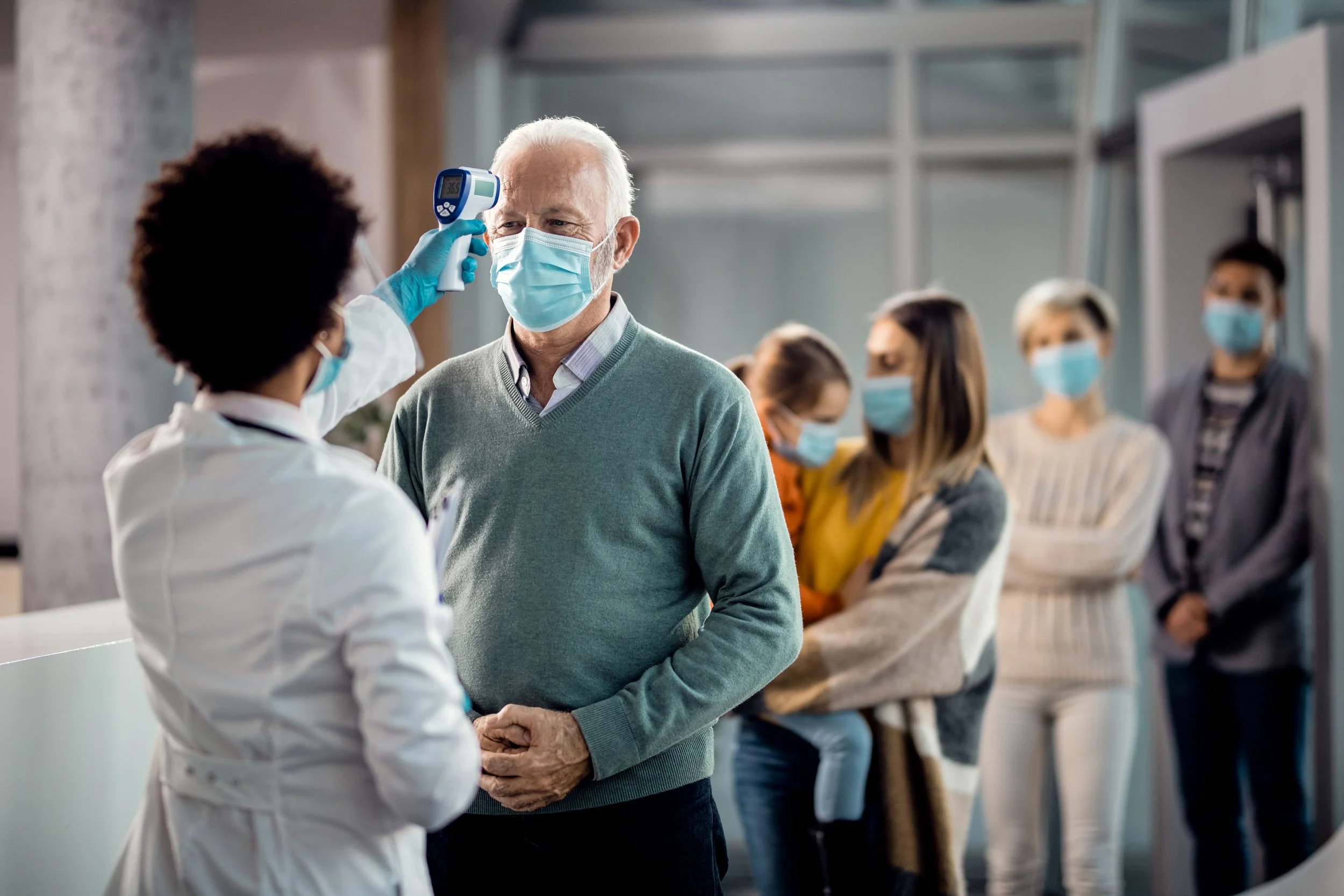

Spanish Conversation for Health Professionals Beginner Level
⏱ Format
Group Size (6–10 participants)
Sessions: 1.5 hours per week over 8 weeks (introduction) or over 16 weeks (full foundational program)
Format: Online training with a live expert instructor
Interactive Focus: 60–70% dedicated to conversation and listening comprehension through healthcare‑specific vocabulary, role‑plays, and bilingual materials
🎯 Level
Beginner-friendly: No prior Spanish required
Focus on real patient interactions, intake, and emergency communication
👥 Designed for patient-facing healthcare professionals, including
Physicians & Specialists, Nursing Staff, Medical & Clinical Assistants, Allied Health Professionals, Mental & Behavioral Health Providers, Hospital Receptionists, Front Desk & Admissions, Emergency Dispatchers & Call Operators, Dental & Pharmacy Teams…..
Session Objectives & Activities
-
Students will be able to greet patients and colleagues in Spanish using both formal and informal expressions.
Activity: Role‑play greetings in different healthcare scenarios (e.g., patient intake vs. team meeting).
Students will be able to introduce themselves and others appropriately in Spanish in healthcare contexts.
Activity: Pair practice introducing oneself to a patient, then introducing a colleague to the patient.
Students will be able to ask for and share names in Spanish with clarity and respect.
Activity: Dialogue practice where students ask for and confirm names during patient registration.
Students will be able to use essential courtesy phrases in Spanish to communicate politely and professionally with patients and coworkers.
Activity: Practice short exchanges using courtesy phrases (e.g., por favor, gracias, con permiso) in simulated hospital or clinic interactions.
-
Students will be able to collect patient demographic information in Spanish (age, gender, contact details, etc.).
Activity: Role‑play patient intake interviews where learners ask and record demographic details.
Students will be able to identify and use days, months, and date formats in Spanish accurately.
Activity: Practice filling out patient forms with dates, scheduling appointments, and confirming birthdates.
Students will be able to use possessive adjectives in Spanish to clarify patient information (e.g., su dirección, su número de teléfono).
Activity: Pair exercises where learners describe patient details using possessive adjectives, followed by short dialogues.
Students will be able to understand and apply the verbs SER (to be) and TENER (to have) in the present tense for healthcare contexts.
Activity: Sentence‑building drills and role‑plays (e.g., El paciente es diabético. El paciente tiene fiebre.).
-
Students will be able to establish basic patient relations and introductions in Spanish.
Activity: Role‑play initial patient encounters, practicing introductions and building rapport.
Students will be able to describe pain and identify body parts in Spanish when discussing symptoms.
Activity: Guided dialogues where learners ask patients to point out or describe pain using vocabulary for body parts.
Students will be able to ask about symptoms and respond appropriately in Spanish.
Activity: Pair practice simulating patient interviews, focusing on symptom‑related questions (e.g., ¿Dónde le duele? ¿Cuánto tiempo ha tenido este dolor?).
Students will be able to recognize and use vocabulary for common symptom areas in Spanish.
Activity: Matching exercises and short role‑plays where learners connect symptom vocabulary to patient complaints (e.g., headache, fever, stomach pain).
-
Students will be able to engage in warm‑up conversations in Spanish to build comfort and rapport.
Activity: Short ice‑breaker dialogues (e.g., greeting and asking simple questions about well‑being).
Students will be able to ask about and discuss a patient’s medical history in Spanish.
Activity: Role‑play intake interviews where learners ask about past illnesses, surgeries, allergies, and family history.
Students will be able to recognize and correctly use definite and indefinite articles in Spanish.
Activity: Guided practice filling out patient forms and describing medical conditions using el, la, los, las, un, una.
Students will be able to learn and apply lifestyle vocabulary in Spanish during medical appointment scenarios.
Activity: Simulated consultations where learners ask about diet, exercise, sleep, and habits, then respond with advice or clarifications.
-
Students will be able to review and consolidate key concepts from previous sessions.
Activity: Interactive quiz and group discussion to reinforce greetings, introductions, patient information, and symptom vocabulary.
Students will be able to learn and practice vocabulary related to examination tools and basic medical procedures in Spanish.
Activity: Vocabulary matching exercises and role‑plays simulating the use of tools (e.g., termómetro, estetoscopio, presión arterial).
Students will be able to develop vocabulary skills and apply them in contexts involving safety and risk factors.
Activity: Scenario practice where learners advise patients on safety measures (e.g., riesgo de caídas, uso de medicamentos, alergias).
Students will be able to acquire and apply vocabulary knowledge on physical sensations and common symptoms in Spanish.
Activity: Patient‑provider dialogues where learners ask about sensations (e.g., mareo, cansancio, dolor) and respond appropriately.
-
Students will be able to consolidate and broaden vocabulary and grammar to explain medical diagnoses in patient‑friendly Spanish.
Activity: Practice simplifying complex diagnoses into clear, empathetic explanations through role‑play scenarios.
Students will be able to build vocabulary competence and apply it when discussing or explaining test results in Spanish.
Activity: Simulated consultations where learners explain lab results or imaging findings using accessible language.
Students will be able to acquire and apply language skills to discuss medical diagnoses and their implications with patients.
Activity: Case study dialogues where learners explain the meaning of a diagnosis and its impact on lifestyle or treatment.
Students will be able to develop vocabulary and grammar to communicate treatment instructions in patient‑friendly Spanish.
Activity: Guided practice giving clear instructions for medication, follow‑up appointments, or lifestyle changes, with emphasis on clarity and empathy.
-
Students will be able to learn and apply vocabulary and grammar to communicate medical recommendations clearly in Spanish.
Activity: Role‑play consultations where learners give recommendations about diet, rest, medication, or follow‑up care using patient‑friendly language.
Students will be able to expand vocabulary and refine grammar to communicate medical needs effectively in urgent and emergency scenarios.
Activity: Simulated emergency dialogues (e.g., Tiene que ir a urgencias inmediatamente, Necesita una radiografía ahora) where learners practice giving urgent instructions with clarity and authority.
-
Students will be able to strengthen their Spanish language skills to address public safety concerns in healthcare settings.
Activity: Practice dialogues where learners explain safety measures to patients and families (e.g., No toque el equipo médico, Mantenga la distancia de seguridad).
Students will be able to use Spanish effectively to ensure compliance with medical instructions and institutional policies.
Activity: Role play scenarios where learners give clear compliance instructions (e.g., Debe tomar la medicina cada ocho horas, Es obligatorio usar mascarilla en esta área).
Students will be able to deliver emergency instructions in Spanish with clarity and authority.
Activity: Simulated emergency drills where learners practice urgent commands (e.g., Llame a emergencias, Salga por la salida de emergencia, Mantenga la calma).
Students will be able to engage in interactive conversations to apply the knowledge and skills acquired throughout the course.
Activity: Group role plays combining greetings, patient intake, symptom discussions, diagnoses, and emergency instructions into full patient provider interactions.